Singapore EV Ecosystem Explained

Top Features in an EV
What are the top features to have when shopping for your new EV? Not all EVs are created equal. Check out our recommendations in our EV buyer guide.
Types of EV Battery
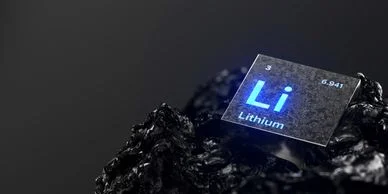
NMC and LFP are both lithium-ion battery chemistries. Confirm the chemistry fitted to the exact Singapore variant. All top charging stations support both types of EV batteries.

AC and DC Charging
In a nutshell, AC charging is generally suited to longer stays, while DC charging can support faster top-ups. Identify the connector and power rating; nozzle count does not determine charging speed.
Charging Station Guide
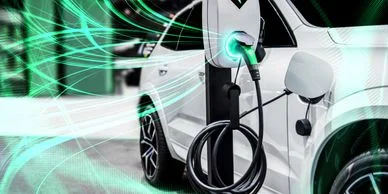
Singapore’s EV top charging stations feature various providers. Drivers must install multiple apps to use these different charging stations.

What are the Key Differences in an EV
Learn about the key differences among various EV brands and what sets them apart from one another.
China EV over Mass Market ICE cars
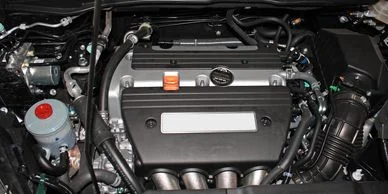
Still on the fence in a fix on EV vs ICE car like Toyota Vios, Altis, Civic, Freed or HR-V?
THE ULTIMATE EV BUYER'S GUIDE
10 MUST-HAVE EV FEATURES
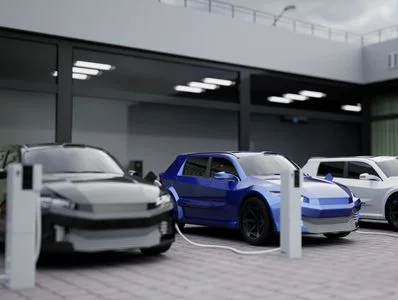
Thinking of making the switch to electric? Look out for our Ev Buyer Guide. In 2026, EV adoption in Singapore has hit an all-time high, but choosing the right car is no longer just about range—it’s about future-proofing your investment. With Category A COE now favoring a wider range of 110kW models and a massive expansion in our national charging network, your next vehicle needs more than just a battery; it needs the right tech to stay relevant.
From the debate between LFP vs NMC batteries to the convenience of V2L (Vehicle-to-Load) capabilities, we’ve analyzed the latest data from the LTA and top-selling brands like BYD and Tesla to bring you the definitive list of essential features. Whether you're eyeing a "Made in Singapore" Hyundai Ioniq or a tech-heavy newcomer like Xpeng, here are the top must-have features in a new EV.
High-speed DC charging
The top must-have feature in a 2026 EV is high-speed DC charging (at least 150kW+), as it ensures the car is future-proofed for Singapore's expanding flash-charging network.
WLTP driving range
Get an EV that has at least WLTP range of 550km.
A full-featured vehicle app
A full featured App for the EV. To get a good idea of a full featured app is to take a look at Tesla, Xpeng or BYD app. They are the industry leading example. Features such as charging status, remote cabin cooling, sentry mode activation, car lock status, remote start etc
Proximity key and automatic start
A proximity key fob enables automatic locking and unlocking without the need to press any buttons. The EV can also start automatically upon entry, eliminating manual start actions. However, be aware that some brands exhibit unusual behaviour by shutting down all systems when the driver briefly exits the vehicle, which can be highly frustrating.
Automatic parking and 360° view
Auto Parking, currently only available in a handful of brands such as Tesla and Xpeng, should be the default feature in future EVs. So do not be caught with an outdated EV that will hurt resale value. 360 degree view is also a default feature to have.
Level 2 driver assistance
Level 2 driver assistance with Advanced Driver Assistance System or known as ADAS. This includes adaptive cruise control, lane keep assist (LKA) and traffic jam Stop & Go assist function. These are driver-assistance features. Stay attentive and ready to take control at all times; they do not permit attention away from driving.
Sentry mode and camera recording
Sentry Mode and on-the-road recording using the EV existing cameras without having to retrofit third party cameras. EVs with such function are namely Tesla and Xpeng.
Ventilated seats and massage
Ventilated seats, coupled with massage functions. Higher end Chinese EVs comes with real leather seats to add to plush feel and resale value.
Adjustable regenerative braking
Adjustable brake regeneration is an important feature, as overly strong regenerative braking can feel uncomfortable and may even cause motion sickness for some drivers and passengers. Ideally, the vehicle should offer paddle shifters that allow you to adjust the regeneration level conveniently while driving. During your test drive, thoroughly evaluate the braking effect at different settings and ensure the salesperson demonstrates how to adjust it, especially if paddle controls are not available.
Accelerator and braking feel
During your test drive, pay close attention to the accelerator and braking feel, as these can vary significantly between EV models. Some vehicles may have a heavier accelerator that requires more pressure to move off, while others may feature overly sensitive brakes that cause jerky initial stops. Since EVs are engineered differently from traditional internal combustion engine (ICE) cars, their driving dynamics can feel noticeably different.
Conclusion: Which EV is the Best Value in 2026?
Choosing a new EV in Singapore is no longer about being an "early adopter"—it's about making a smart financial decision in a maturing market. As COE prices remain high and VES/EEAI rebates begin to taper, the "best value" car is the one that balances a low entry price with high future residual value.
If you are looking for the absolute best bang for your buck, the BYD Sealion 7 (Dynamic) and the Xpeng G6 are currently leading the pack. Both offer Category A COE eligibility, robust LFP batteries for local longevity, and the high-speed DC charging required to keep you moving in a busy city. However, for those who value software and a dedicated charging network, the Tesla Model 3 remains a top contender, despite the recent PARF policy shifts.
Ultimately, the best EV for you is one that fits your lifestyle today while remaining "future-proof" for the next decade. Before you sign on the dotted line, ensure your choice includes the "must-have" features we’ve discussed—your future self (and your resale value) will thank you.
EV Battery Types
All About EV battery
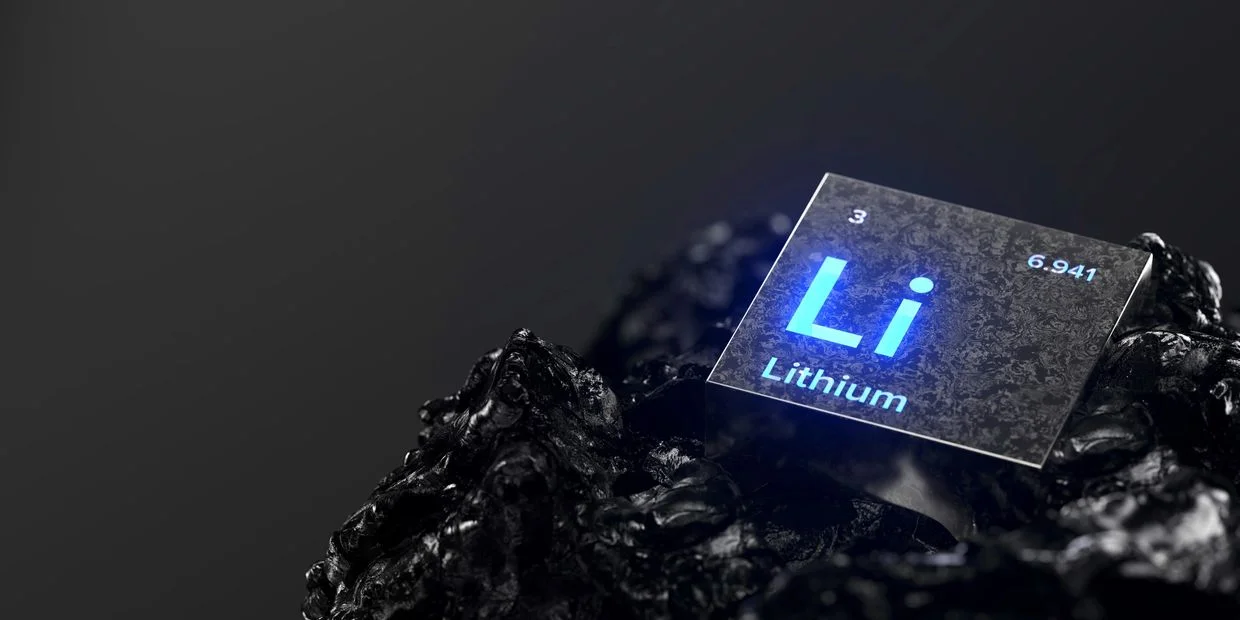
The electric vehicle (EV) market has moved beyond the "one-size-fits-all" approach to battery technology. The choice of battery now defines whether a car is a budget city commuter, a long-distance cruiser, or a high-performance machine.
An important point to note when shopping for an EV is that many EV specifications in Singapore simply state “Lithium-ion”, which can easily be mistaken for NMC. To clarify, Lithium-ion is the battery family, while LFP and NMC describe different chemistries within that family. Hence lithium-ion refers to the overall battery family, not the specific chemistry. LFP and NMC are different types of lithium-ion batteries. Therefore, if an EV is listed only as “Lithium-ion”, you cannot assume it uses NMC. The actual battery chemistry must be confirmed separately, as this determines important differences in range, charging characteristics, durability, safety and cost.
Below is a breakdown of the different types of EV batteries available now or in the future, along with their respective advantages and disadvantages.
1. NMC (Nickel Manganese Cobalt) (Current)
NMC is the "gold standard" for high-performance and long-range EVs. It is the most common chemistry found in premium brands like Tesla, BMW, and Audi. These batteries are prized for their energy density, meaning they can pack a lot of power into a relatively small and light package.
Advantages:
- High Range: Offers the best driving range for the weight.
- Performance: High power output makes it ideal for fast acceleration and towing.
- Cold Weather: Performs better in freezing temperatures compared to LFP.
Disadvantages:
- Cost: Uses expensive and rare materials like cobalt and nickel.
- Lifespan: More sensitive to heat and frequent fast charging; typically lasts 1,000–2,000 cycles.
- Safety: Higher risk of "thermal runaway" (fire) if the battery is punctured or severely overheats.
2. Lithium-Iron Phosphate: LFP (Current)
LFP has surged in popularity, now powering nearly half of all new EVs globally (especially mass-market models from BYD and Tesla's standard range). Instead of nickel and cobalt, it uses iron and phosphate—materials that are abundant and cheap.
Advantages:
- Longevity: Can easily last 3,000–5,000 cycles. The recommended charge limit depends on the vehicle; charging to 100% does not eliminate battery ageing.
- Safety: Extremely stable; it is much harder to set an LFP battery on fire.
- Cost: Significantly cheaper to produce, leading to more affordable EV prices.
Disadvantages:
- Heavier: Lower energy density means the battery must be larger and heavier to achieve the same range as NMC.
- Winter Range: Suffers more range loss and slower charging speeds in very cold climates.
3. Sodium-Ion (The New Contender)
An emerging option with availability dependent on the manufacturer and market Sodium-Ion batteries are the "game-changer" for entry-level EVs. They replace lithium with sodium (common salt), making them incredibly sustainable and immune to lithium price spikes.
Advantages:
- Lowest Cost: Potential to be 20–30% cheaper than even LFP.
- Safety & Stability: Safety depends on the cell design, electrolyte and transport requirements; sodium-ion is not universally non-flammable.
- Fast Charging: Can charge to 80% in about 15 minutes.
Disadvantages:
- Short Range: Currently limited to small city cars (approx. 200–300km range) due to lower energy density.
- Early Stage: Still scaling up; not yet available for larger SUVs or high-performance cars.
4. Solid-State Batteries (The Future)
Long hailed as the "Holy Grail," solid-state batteries (SSB) are starting to appear in limited production and high-end prototypes in 2026. They replace the liquid electrolyte found in traditional batteries with a solid material.
Advantages:
- Extreme Range: Could provide 1,000km+ on a single charge.
- Ultra-Fast Charging: Theoretically capable of a full charge in under 10 minutes.
- Safety: A solid electrolyte does not make a battery risk-free. Safety depends on the cell chemistry, pack design and operating conditions.
Disadvantages:
- Prohibitive Cost: Currently extremely expensive to manufacture.
- Manufacturing Complexity: Difficult to produce at the scale needed for millions of cars.
5. Nickel-Metal Hydride (NiMH)
While rare in pure EVs, NiMH remains the backbone of the "self-charging" hybrid market (like the Toyota Prius). It is a mature, reliable technology that has been in use for decades.
Advantages:
- Reliability: Extremely durable; many NiMH batteries last the entire life of the car.
- Safety: Very safe and contains fewer toxic materials than older battery types.
Disadvantages:
- Low Energy: Not powerful enough to run a modern long-range fully electric vehicle.
- Weight: Much heavier than lithium-ion for the amount of energy stored.
Choosing the right one: If you do a lot of long-distance driving, an NMC battery is still king. However, for most city dwellers looking for a reliable, safe car that will last 10+ years, LFP is currently the best value on the market.
AC & DC Charging
Fun Facts on AC & DC Charging
In the world of electric vehicles (EVs), the debate between AC and DC charging is the modern equivalent of the "War of the Currents" between Tesla and Edison. While both deliver energy to your car, they do so in fundamentally different ways.
As of 2026, Singapore has surpassed 28,000 charging points, making it more important than ever for drivers to understand which plug to use and when.
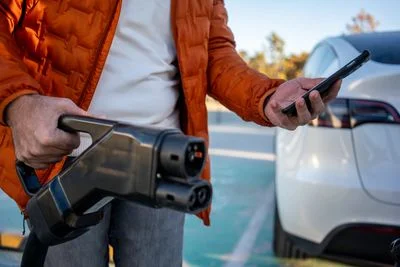
1. AC CHARGING (ALTERNATING CURRENT) - AC power converted by the car
AC charging is the most common method of "refueling" an EV. When you plug into a standard wall socket or a dedicated home charger, you are using Alternating Current. However, since batteries can only store Direct Current (DC), the car must convert this power using an internal component called the On-board Charger (OBC).
a. The Three Levels of AC Charging
In the current market, AC charging is categorized by its power delivery:
- Level 1 (Trickle Charging): Uses a standard 3-pin household plug. It is the slowest method. This is mainly used as a backup and as of this date, it is not allowed in Singapore.
- Level 2 (Wallboxes): The most popular choice for condos, landed properties and HDB car parks. These operate between 7.4kW and 22kW. A 7.4kW charger can fully charge a standard EV overnight in about 8–10 hours.
- Higher-power AC charging: Rare but still available at some industrial sites, providing up to 43kW. However, most modern EVs are limited by their internal OBC to either 7kW or 11kW, meaning they cannot take full advantage of 43kW AC points.
b. The On-board Charger Bottleneck
- The defining characteristic of AC charging is the On-board Charger (OBC). Unlike a petrol car where the pump determines the speed, an AC charger’s speed is dictated by the car. If you plug a car with a 7kW OBC into a 22kW charger, the car will still only pull 7kW. This internal converter is kept small to save weight and space, which is why AC charging is inherently slow.
c. Grid Compatibility and Safety
- AC charging is remarkably grid-friendly. Because it pulls power at similar rates to a large air-conditioning unit or an electric oven, it doesn't require massive infrastructure upgrades for most buildings. This makes it the sustainable choice for mass-scale deployment in residential areas like HDB estates.
Pros of AC Charging
- Battery Longevity: Low-intensity charging generates less heat, which preserves the chemical health of the battery over a 10-year lifespan.
- Cost-Effectiveness: AC electricity is cheaper than DC. In Singapore, public AC charging typically costs around $0.65 per kWh, whereas DC can be slightly higher starting from $0.70 per kWh, dependent on the charging company.
- Convenience: It aligns with "park and forget" behavior. You charge while you sleep or work.
Cons of AC Charging
- Slow Speed: Not suitable for long-distance travel or quick top-ups.
- Hardware Limits: You are at the mercy of your car’s internal converter (OBC).
2. DC CHARGING (DIRECT CURRENT) - DC power supplied to the battery
DC charging, often called Fast Charging or Rapid Charging, is the petrol station experience of the EV world. The primary difference is that the conversion from AC to DC happens outside the car, inside the massive charging station itself.
a. Bypassing the Converter
Because the charging station does the heavy lifting of converting electricity, it feeds DC power directly to the battery. This is why DC chargers can be massive—some the size of a refrigerator—because they house powerful rectifiers and cooling systems that would be too heavy to carry inside a car. This bypasses the car's limited On-board Charger. It is the combination of the Battery Management System (BMS), Battery Pack Voltage Architecture (400V vs 800V) and Battery Chemistry that will determine the safe charging speed for the EV.
b. The Charging Curve and 80% Rule
DC charging is not linear. To protect the battery, EVs charge very fast from 10% to 80%, but throttle the speed significantly for the final 20%. Think of it like a theater: when it's empty, people can run in and find seats quickly (fast charging). As it gets full, the last few people have to walk slowly to find the remaining seats (slow charging). This is why most DC charging stats only quote the time to 80%.
c. High-Power Infrastructure (50kW to 500kW)
DC chargers in Singapore have evolved broadly into three main categories:
- Rapid Chargers (50kW): Standard for malls and quick-stop locations.
- Standard Fast Chargers (100kW–150kW): Becoming the new norm for premium locations like Shell Recharge or SP Group hubs.
- Ultra-Fast Chargers (350kW+): Mainly used by ultra-fast charging EVs like the Xpeng G6 LR with 800V architecture reaching a peak charging speed of 451kW capable of charging 10% to 80% in just 12 minutes.
Pros of DC Charging
- Incredible Speed: Perfect for road trips (e.g., driving from Singapore to KL) or for private-hire drivers who need to minimize downtime.
- Efficiency: Modern DC chargers like Huawei’s liquid-cooled units reach over 95% efficiency, meaning very little energy is lost as heat during the transfer.
- Emergency Utility: If you're at 5% battery, a 30-minute DC session can give you enough juice for the day.
Cons of DC Charging
- Higher Cost: Due to the expensive equipment and high electricity demand, DC charging is the most expensive way to fuel an EV.
- Battery Stress: Frequent, exclusive use of ultra-fast DC charging can lead to faster battery degradation due to the intense heat generated.
- Availability: While growing, DC chargers are less common than AC points and are often occupied during peak hours.
AC charging can fit longer parking stops, while DC can be useful when time is limited. Choose based on your car’s guidance, the complete session cost and your routine rather than a fixed AC/DC percentage.
EV Charging Stations in Singapore
Download Plugshare for real time status of charging stations
What Are the Key Differences Between EV Brands
Tesla, BYD and Xpeng fight it out on 800V architecture and battery energy density
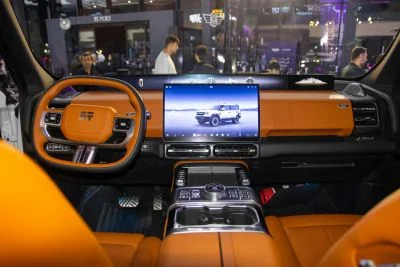
EV Differentiators
In 2026, the gap between EV brands is defined by how technical specs translate into daily reliability. While battery capacity (kWh) remains the "fuel tank" of the car, savvy buyers now prioritize energy density and battery chemistry—specifically the rise of LFP (Lithium Iron Phosphate) for longevity versus Solid-State for ultra-high performance.
The real differentiator, however, is charging architecture. Brands using 800V or 1,000V systems now offer "flash charging," adding 400km of range in under 10 minutes, effectively ending range anxiety for long-distance travelers. Furthermore, thermal management software has become a critical feature, ensuring that "claimed range" stays consistent even in freezing temperatures. When comparing brands today, the winner isn't just the car with the biggest battery, but the one that combines high-speed DC charging compatibility with efficient kWh-per-100km consumption.
- Battery Size
- Type of Battery
- WLTP Range - > 500km
- Road Tax
- Charging Speed
- Efficiency : < 15kWh/100km
- HP and Torque
- Auto Parking
- Full feature App
- Auto Pilot - Level 2
Electric Car vs ICE Car in Singapore
There is a notable feature gap between entry level electric cars and equivalent ICE models.
Car buyers who have done their homework will agree that EV features are more attractive compared to ICE cars. Generally when comparing same class and same price point, EVs are better equipped. Standard common features found in EVs are listed below:
Electric Front Seats with Memory
It is common that even the most basic model of EV are equipped with electric seats for driver and front passenger. And memory seats are common too. Mass market ICE cars like Vios are all manual seats.
Ventilated Front Seats
A must-have in Singapore weather. Once you try ventilated seats, you will not compromise on this feature. Example : BYD Seal 6 has ventilated front seats. Toyota Corolla selling at a higher price does not have ventilated front seats. Some EVs also have massage function as standard.
360 degree view
A very popular feature in EV is the 360 degree view. This feature is very helpful when navigating tight corners and during parking. Your spouse will love this feature.
Adaptive Cruise Control
Once a top feature found only in top luxury ICE car is standard in many EVs. Currently many continental ICE cars need to pay extra or indent for this feature. Some EVs include standard Lane Departure Assist (LKA) to bring it up to Level 2 driver assistance.
Blind Spot Monitor and Tyre Pressure Monitor
A basic feature in most EVs but not available in mass market ICE cars. Some EVs like the Xpeng G6 include video feed on the screen to show the blind spot.
Remote Start/Aircon/Windows
The wonders of EVs have made this a possibility at a fraction of a costs. One of the best feature is that idling with car aircon turned on does not contribute to air pollution, hence do not attract fines by NEA.
Electric Tailgate
Most EVs come with electric tailgates as standard.
Sunroof
Even in sunny Singapore, sunroof is a welcome feature in a car as it brings more light to the car to make it feel more spacious and lively. Always an extra cost in ICE cars, most EVs have sunroof as standard feature.
Explore brands & destinations
Continue with the detailed Singapore guides
This page is the beginner overview. For dated information and practical tools, continue with charging costs and parking, charging idle fees, EEAI and VES registration dates and used-EV inspection checks. Historical model figures and opinions elsewhere in this overview should be checked against the exact current Singapore variant before purchase.